
Whistling During a Darts Throw: What to Do at the Oche
Understand the rules around whistling during a darts throw, handle deliberate disruption and test a simple reset with a scored 60-dart drill.
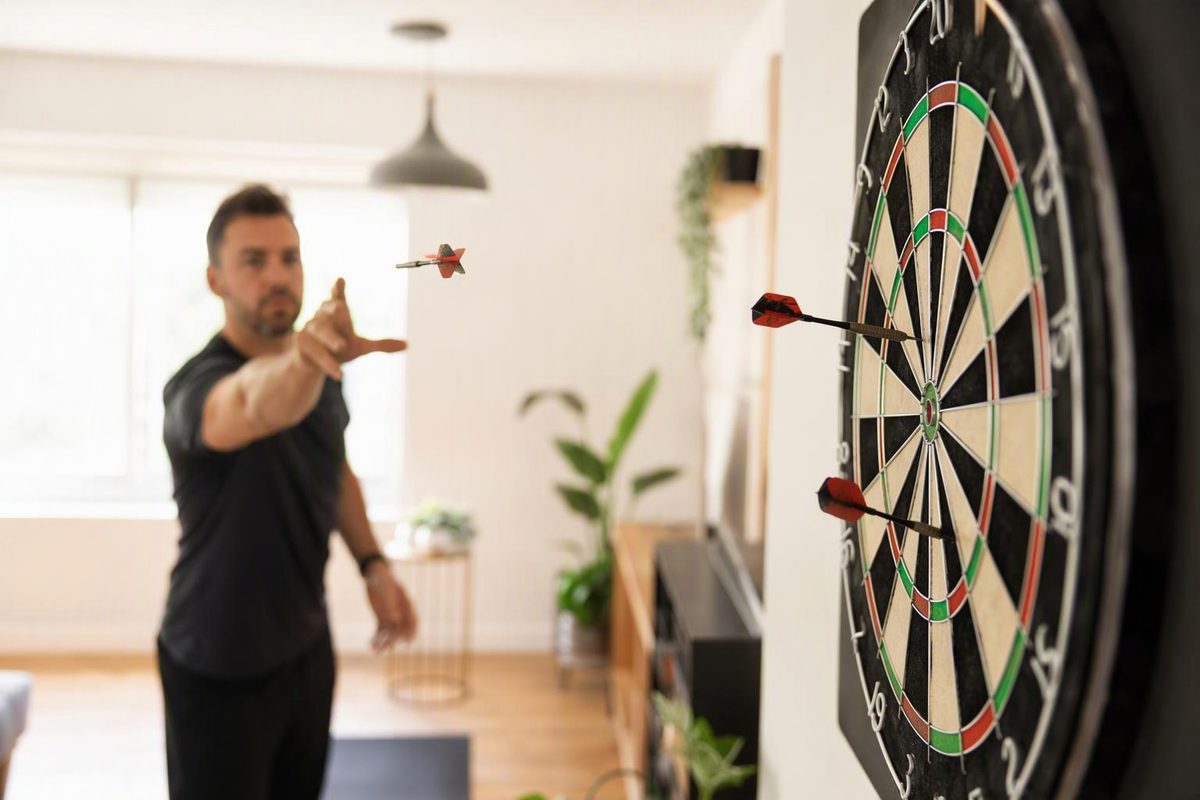
Whistling aimed at distracting a darts player during their throw is not something the PDC condones. Its February 2025 statement explicitly included both whistling and booing when players are throwing, and said spectators behaving inappropriately can be removed under event entry conditions. That is an event-management policy, not a guarantee that every whistle will lead to an ejection. The Guardian reproduced the PDC statement.
For a pub or league player, separate two jobs: let the official or organiser handle deliberate disruption, while you return your attention to a repeatable throwing routine.
Crowd noise and opponent conduct are different
A noisy room is not the same situation as someone deliberately whistling as you release. Mark Webster made that distinction in comments reported by Dartsnews following Luke Littler’s crowd trouble in Amsterdam: he described whistles during a throw as sharper and more distracting than constant booing. That is an analyst’s assessment, not a rule permitting booing. Read Webster’s comments.
An opponent has a separate obligation. DRA rule 6.15.4 requires players to remain silent during their opponent’s throw. For this rule, that period begins once the other player has retrieved their darts from the board—not just when they start their throwing action. The 2026 rulebook, in force from 31 March, also provides in-play sanctions for persistent gamesmanship and disruptive behaviour. These rules apply to DRA-governed events; your local league may use a different rulebook. DRA rules, sections 6.9 and 6.15.
If it happens in league play, describe the behaviour to the referee or organiser: “There is repeated whistling as I throw.” Ask them to address it under the competition’s rules rather than arguing with the person yourself or demanding a particular penalty. Under DRA rule 6.15.5, a reasonable enquiry or protest to the referee should be made after the opponent’s throw has finished.
Use one reset, not a new throwing technique
Adrian Lewis’s advice to Littler was to avoid reacting to booing and whistling. That is useful as an attention cue—not a reason to leave deliberate disruption unreported. Sky Sports published Lewis’s advice on 28 September 2026.
Try this short reset:
- Before starting the next dart, lower your throwing hand if the distraction has broken your preparation. Do not force a release just to get it over with.
- Take one comfortable breath and check your usual foot position.
- Pick the exact target again. Use one cue, such as “eyes on the target,” rather than checking every part of your mechanics.
- Resume your normal rhythm. Avoid turning towards the noise to judge whether it has stopped.
If the dart is already released, leave that result behind and prepare the next one. For a fuller between-visit routine, use the emotion regulation checklist.
Test it with 60 darts
This is a suggested practice check, not a validated treatment for distraction.
Setup: Choose one target—such as the 20 wedge, counting singles, doubles and trebles as hits, or just double 16—and keep it unchanged. Use your normal equipment and stance. Choose one target cue to use before every dart; use the reset above only when your preparation is interrupted.
Action: Throw 30 darts in quiet, then 30 with ordinary crowd audio at a comfortable volume. Keep the sound source outside the throwing lane. Do not ask someone to ambush your release with loud whistles; practise returning to your routine, not enduring escalating disruption.
Record for each block:
- Target hits out of 30.
- Three-dart visits out of ten in which you used your target cue before every dart.
- Any observable reaction: rushing, looking away or changing your setup.
Checkpoint: Repeat on another day with the noisy block first. Compare both hits and cue completion; one poor block does not establish that your mechanics need rebuilding. If distraction keeps breaking the sequence, simplify the reset to one breath and one target cue before changing your grip or stance.