
Get Ready for Your Ten DartCounter Ranked Placement Games
Build a repeatable DartCounter placement routine: test your camera, rehearse online match rhythm, warm up scoring and doubles, then review each session.
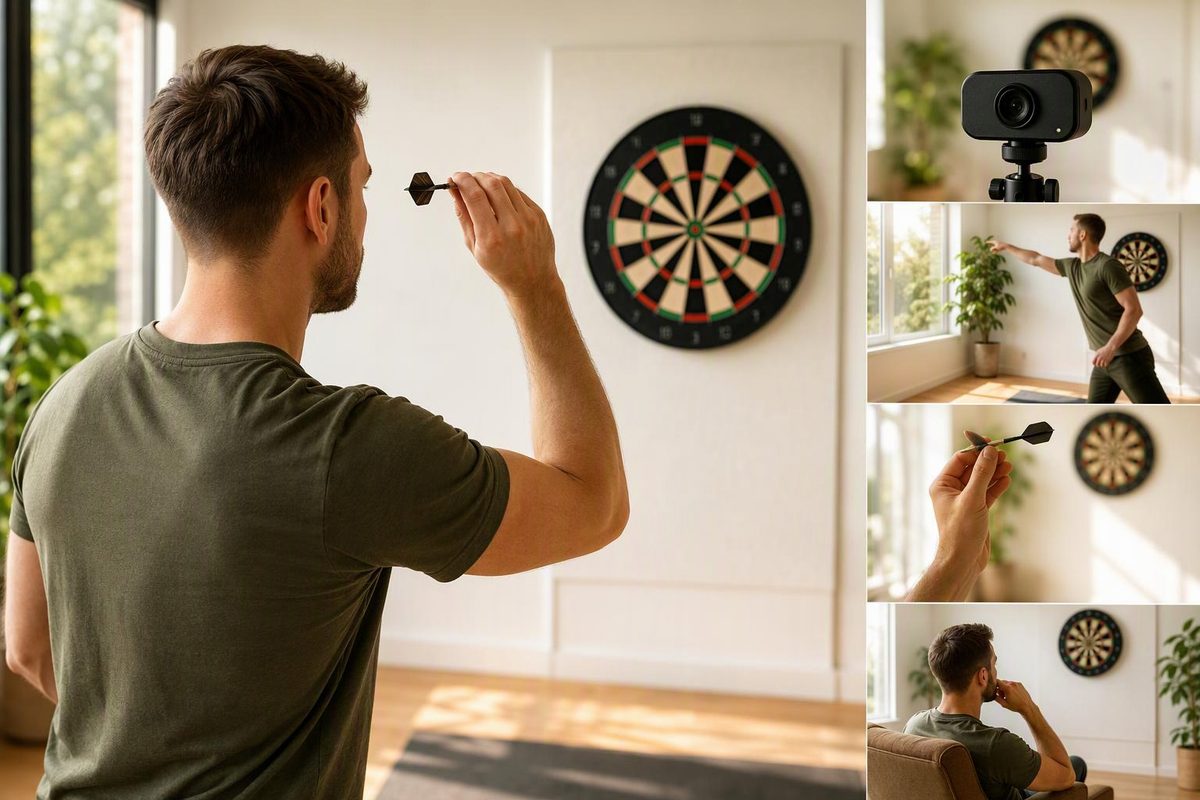
Prepare for DartCounter Ranked placement matches by testing your camera, completing an online rehearsal and repeating the same short warm-up before each session. Plan the 10 placement games around uninterrupted playing time, rather than trying to finish them in one sitting. Arrive with a working setup and a familiar routine—not a new grip or an assumed average that you think will guarantee a rank.
As of 1 October 2026, DartCounter’s first official season, Road to Diamond – Autumn, is underway. DartCounter lists it as running from 8 September to 1 December 2026. You receive a starting rank after 10 placement games, based on your performance. After placement, wins add Ranked points and defeats deduct them. DartCounter’s season announcement sets out those requirements.
Check your camera, rehearsal and available playing time; use the result to choose your next step.
Placement Readiness Check
Check the camera first, then rehearse a complete online match and confirm that you have uninterrupted playing time.
This checks practical preparation, not app eligibility or your likely starting rank. Use your usual warm-up before playing.
What Each Check Means
Camera: Confirm the connection, board visibility, lighting and camera stability.
Rehearsal: Test score entry, displayed remainders and returning to your stance after an opponent's turn.
Session: Allow for the opponent's turns. Pause if you are tired, repeatedly mis-entering scores or rushing to recover a defeat.
Source: DartCounter's August 2026 launch announcement requires a camera; the readiness checks are this article's practice recommendations, not platform rules.
Prepare for Matches, Not a Predicted Rank
In its August 2026 Ranked launch announcement, DartCounter describes five tiers: Bronze, Silver, Gold, Platinum and Diamond, each divided into divisions. Matchmaking is rating-based. A camera setup is required; OMNI is optional. Do not buy an automatic scoring system solely because you think Ranked demands one. DartCounter’s launch announcement confirms these details.
The season announcement does not explain how individual performance measures are weighted when assigning your starting rank. There is therefore no supported “average of X guarantees Gold” target. Nor does the published information provide a placement calculator that turns your practice average into a reliable starting-rank prediction.
That changes what useful preparation looks like. Practising only your scoring target may make the first visits feel comfortable, but your rehearsal also needs to include score entry, checking remainders, finishing attempts and waiting through an opponent’s turns. Prepare for the whole match you will have to play.
Keep two questions separate: whether your setup is ready for Ranked, and whether you are playing at your best. The first can be checked before you queue. The second will vary between sessions. A modest warm-up score does not make your camera unreliable; a strong warm-up score does not fix a camera that keeps moving.
Complete an Online Rehearsal Before Your First Placement
Use your intended Ranked setup for an ordinary online practice match. The purpose is to expose interruptions before a placement result is involved. A solo scoring session cannot test everything that happens when another player is taking turns.
Start by checking Ranked access and any requirements shown in your current app version. Confirm that the camera connects and that the board and dart positions are clearly visible in the preview. Check the lighting for glare or shadows, secure the camera, and power or charge the devices you will use.
Verify the board and oche as well. If either has moved, use our dartboard setup guide before rehearsing. Otherwise, you risk testing a playing arrangement that you will have to change again before the actual placements.
Allow enough uninterrupted time for a complete match, including the opponent’s turns. The draft’s official sources do not give a dependable match-duration figure, so there is no supported minutes-per-placement estimate here. Use your rehearsal to judge the time you need rather than budgeting only for your own throwing.
During the match, practise entering scores, checking the displayed remainder and returning to your stance after a wait. Notice whether the camera stays secure when you retrieve darts and whether you can resume play without repeatedly finding your position again. Resolve camera or scoring problems before entering placements.
The checkpoint is concrete: complete a match without adjusting the camera or repeatedly stopping to work out the app. If you cannot, repeat the rehearsal after fixing the problem. Do not treat several successful opening visits as proof that the entire setup works.
If the rehearsal fails, name the failure precisely. “Not ready” is less useful than “camera moved during retrieval” or “I entered the wrong score after a long wait.” Fixing that specific interruption gives the next rehearsal a clear purpose.
Repeat a Warm-Up That Includes Scoring and Finishing
The following routine is a practice suggestion, not a DartCounter requirement. Use your usual darts, grip and stance throughout. Its value is that you can repeat it and compare like with like; it is not a test you must pass to enter Ranked.
| Block | Action | Record |
|---|---|---|
| Scoring | Throw 10 three-dart visits at your usual scoring target | Total points across 30 darts |
| Doubles | Throw two three-dart visits each at D16, D8 and D20 | Hits out of 18 darts |
| Match rhythm | Play two practice 501 legs, pausing between visits | Darts used and finishing-double attempts |
For the doubles block, keep aiming at the named double for all three darts in each visit, including after a hit. That keeps the recorded attempts consistent. You are measuring this doubles exercise, not playing a checkout sequence in which the target changes after each successful dart.
Choose different doubles if they better reflect your usual finishes, but keep the selection unchanged across sessions. If you change targets every time, a rise or fall in hits may reflect the different exercise rather than a change in how you are throwing.
For each practice 501 leg, record darts used in the completed leg and darts attempted at a finishing double. If you stop before finishing, record the darts thrown and the remainder instead. Do not assign an unfinished leg a completed-leg score: the unplayed finish is exactly the part you have not tested.
Use one observable cue throughout: return your front foot to the same position before every visit. This gives you something specific to do after a wait without asking you to monitor grip pressure, elbow position, release and follow-through simultaneously.
Treat the figures as a record of readiness, not a pass mark. A poor scoring block is a reason to notice how the session feels, not an instruction to rebuild your throw. If you want to experiment with mechanics, do it separately using a controlled grip-change test.
Keep the warm-up’s scoring and doubles records separate. A strong total over 30 darts does not tell you how the 18 double attempts went. Equally, a disappointing doubles block should not erase the fact that your scoring routine felt settled. Those distinctions make the record useful after the session.
Spread the Ten Games Across Manageable Sessions
A practical starting plan is two placement games per session, with a break and a brief review between them. This is a scheduling suggestion, not a platform limit. Adjust it to the actual match length and the time you have available.
The plan should remain flexible. If the first match takes longer than expected, completing the second is not a requirement. Your calendar should serve the matches; it should not force you to rush a game because you promised yourself a particular session total.
Before each game, repeat the same sequence: check the camera, connection and score display; set your stance; then choose the exact target. Make that sequence short enough to use even when you are eager to get going after a win or impatient to recover from a defeat.
After a poor visit, check the remainder and plan the next visit. Leave technical analysis until after the match. The immediate problem is the score now left on the board, not whether one stray dart proves that your grip needs changing.
Between games, separate a result you dislike from a problem that needs fixing. A defeat with a stable camera and accurate score entry is different from a match repeatedly interrupted by technical trouble. The former gives you performance to review; the latter calls for a setup check before you queue again.
Stop queuing if you are tired, repeatedly mis-entering scores or rushing to recover a defeat. Those are observable reasons to pause. You do not need to invent a minimum warm-up average or wait for another loss to justify ending the session.
For a fuller reset routine, use the emotion regulation checklist. Keep the reset outside the match where possible: stepping away between games is more useful than starting another placement while still arguing with the previous result.
Handle Waiting Time and Missed Doubles Without Changing Your Throw
Your rehearsal’s pauses matter because online match rhythm includes time when you are not throwing. Use those gaps to follow the score and prepare for your next visit, then return your front foot to its usual position. Avoid turning every wait into another mechanics assessment.
If a visit goes badly, identify the next target from the actual remainder. Do not carry the previous visit’s target forward automatically. This is also why checking the displayed score belongs in the rehearsal: a familiar throwing action is not enough if you are planning from the wrong number.
Missed finishing doubles deserve a similarly narrow response during play. Confirm what remains and choose the next target. Save the explanation—uncertain route, rushed setup or repeated directional miss—for the session review. Changing several technical cues while trying to finish gives you no clean way to judge what helped.
Where checkout uncertainty is the problem, practise the routes that actually caused hesitation after the session. Where the route was clear but the visit was rushed, rehearse the pause and setup instead. Both can appear in your notes as “missed doubles,” but they call for different practice tasks.
The aim is not to suppress every reaction to a miss. It is to give the next visit a usable starting point: correct remainder, chosen target and familiar stance. Those are actions you can repeat without knowing how DartCounter weights placement performance.
Review Ranked Statistics Without Treating the Badge as a Diagnosis
DartCounter’s launch announcement lists separate Ranked statistics for matches played, wins, losses, average, checkout percentage and current rank. Ranked results also enter personal statistics. Use the Ranked view for your Ranked review rather than comparing it indiscriminately with solo practice.
After each session, note the results, the available Ranked figures and one repeatable problem. Keep the observation specific enough to direct the next practice session. “Played badly” offers no task; “hesitated over checkout routes” does.
| Session Observation | Next Practice Task |
|---|---|
| Repeated missed doubles | Repeat a fixed doubles block |
| Uncertain checkout routes | Rehearse the finishes that caused hesitation |
| Rushed visits after misses | Practise pauses and a consistent return to stance |
| Camera or scoring interruption | Fix the setup and repeat an online rehearsal |
Do not let the average replace the finishing record, or the match result replace both. The listed statistics describe different parts of the session. Use your notes to connect a figure with something you actually observed rather than guessing at the cause from the number alone.
Also keep practice conditions visible in your comparisons. The suggested scoring block contains only visits at your usual scoring target; a complete match includes finishing attempts and changing remainders. Those records serve different purposes and should not be treated as interchangeable measures.
Once the 10 placements are complete, your starting rank gives you a competitive starting point. It does not explain every missed double or provide a published formula for what your next practice average must be. Keep the camera check, repeatable warm-up and brief session review. Choose the next practice task from the problem you can identify, not from the badge you hoped to receive.