
Practise the 167 Finish Without Making Every Miss a Failure
Turn Littler’s 167 checkout into a repeatable drill. Learn T20–T19–bull, rehearse miss routes and track three-dart finishes and two-visit recoveries.
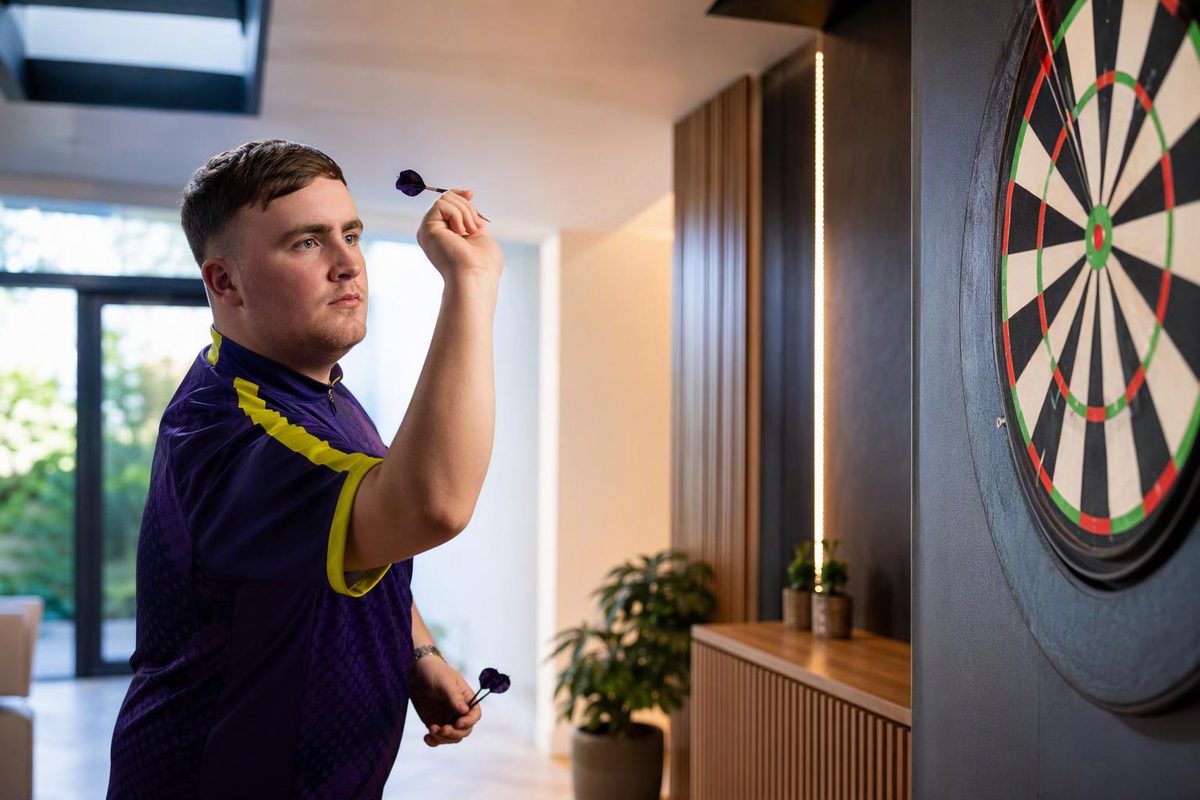
The standard 167 checkout is treble 20, treble 19, bull: 60 + 57 + 50. Practise that sequence, but also record what happens when you miss. Otherwise, a session with no spectacular finish tells you very little.
Luke Littler hit a 167 during the World Matchplay final on 26 July 2026, moments after Gerwyn Price missed a shot at a 145 checkout, according to Sky Sports’ clip description. The finish put Littler 3–1 ahead; Price later described it as a major turning point in ESPN’s match report.
The drill below is inspired by that finish—not a claim about Littler’s own training routine.
Know the route before throwing
The Darts501 checkout chart lists this route:
| Dart | Target | Points | Remaining |
|---|---|---|---|
| 1 | T20: treble 20 | 60 | 107 |
| 2 | T19: treble 19 | 57 | 50 |
| 3 | Bull: inner bullseye | 50 | 0 |
You can reverse the first two trebles: T19 leaves 110, then T20 leaves 50. Choose one order for the drill so your results remain comparable.
The outer bull scores 25, not 50. Only the inner bull finishes this route: it counts as double 25 when 50 remains. These values and the double-out requirement are set out in DRA rules 6.3.1–6.3.2 and 6.5.6–6.5.7.
Set up a two-block session
Use your usual steel-tip board, three darts and a notebook or scoring app. Warm up normally, then start a fresh record. Keep your darts, throwing distance and target order unchanged when repeating the test.
Block 1: ten sequence visits
Throw T20 → T19 → bull on each of ten visits, regardless of where the previous dart landed.
This is target-switching rehearsal, not live checkout play. Even after a single 20, throw at T19 and then bull. Record actual hits separately:
- T20 hits out of 10;
- T19 hits out of 10;
- inner bulls out of 10;
- complete sequences out of 10.
Use one observable cue: before beginning each throwing action, settle your gaze on the next specific target. Check whether you rushed the switch to 19 or the bull; do not overhaul your grip because one dart missed.
Block 2: twenty live attempts from 167
Start each attempt on 167 and allow two visits of up to three darts each. Now score honestly and change targets according to the actual remainder.
- Attempt T20–T19–bull in the first visit while the route remains available.
- After a miss, calculate what remains and choose a setup shot or valid finish.
- Record the remainder, retrieve your darts and step away from the line before the second visit.
- Finish on a double within those two visits, or record the score left. Then reset to 167.
Apply normal bust rules: scoring too many, leaving one, or reaching zero without a double cancels that visit’s score. A bust ends the visit immediately; do not throw its unused darts or carry them into the next visit. If you bust in the first visit, start the second on 167.
Practise the miss, not just the highlight
These examples keep the attempt useful when the three-dart finish disappears:
| What lands | Situation | One practical continuation |
|---|---|---|
| First dart S20 | 147 left with two darts; no two-dart finish | T20, then T17 would leave 36 |
| T20, then S19 | 88 left with one dart; no one-dart finish | T20 would leave 28 |
| T20, T19, outer bull | 25 left after three darts | Next visit: S9, then D8 |
Here, S means single and D means double. These are worked options, not instructions to ignore subsequent misses. If the next dart lands elsewhere, subtract its actual value and recalculate.
For subtraction support, use the darts chalking guide.
Record a result you can compare
Keep the rehearsal block separate from the live block. For the twenty live attempts, record:
- Three-dart finishes: completed 167s out of 20.
- Bull chances created: attempts where the first two darts left exactly 50.
- Bull finishes taken: successful third-dart bulls divided by those chances.
- Two-visit finishes: all completed attempts within the limit, including three-dart finishes.
For example, four bull chances and one successful bull means 1/4 at the finishing bull, but 1/20 completed 167s. Those measure different things. If you create no bull chances, mark bull conversion as “no attempts”, not 0%.
Repeat the same session three times before changing it. Few bull chances point you towards treble and switching work; chances without finishes give you a reason to isolate the bull. Treat those as priorities to test, not a diagnosis from one small sample.
If even two visits rarely produces a finish, shorten the live block to ten attempts and spend the saved darts on structured doubles and lower-checkout practice. Keep the 167 as a stretch test, not your entire finishing session.